Mobile apps, from first plan to ongoing support
Firecane develops iOS and Android applications and works with teams that need additional development capacity. We can lead a new product, help finish an existing app, or support the software after launch.
Plan the app around its users
A practical approach to mobile development
Every app starts from a different place. Some clients bring a new idea; others need a development partner for an application already in use. We work with internal teams and other agencies to plan features, choose an approach, and carry the project through its next stage.
The decisions behind a useful mobile app
Understand the purpose and priorities
We begin with the people who will use the app and the tasks it needs to support. Those requirements guide the project plan and the choices that follow.
Match the technology to the requirements
Would a mobile-friendly web app do the job?
A responsive web application can be a practical option for some projects. When a feature needs access to device hardware, we consider how that requirement affects the choice of a mobile app.
Cross Platform Development Stacks
For a mobile app, we review whether a shared codebase using React Native, Ionic, or Cordova suits the requirements. The intended platforms and features guide that decision; some projects target one platform, while others need both iOS and Android.
Andriod Native Development
For native Android projects, our development work includes Kotlin.
IOS Native Develoment
Our iOS work includes Swift applications and support for older Objective-C code.
Testing & QA
Before launch, your plugin is tested across devices, browsers, and use cases.
Launch & Support
We help you deploy with confidence to both Google Play and the App Store, and offer ongoing support and improvements when you need them.

Mobile App Development
I had the pleasure of working with Travis, and highly recommend him for web development needs. His work was consistently delivered on time, with exceptional quality that exceeded our expectations. Travis offered invaluable expertise and guidance to our inexperienced project team, helping us navigate challenges with confidence. He was trustworthy in his recommendations, always keeping the project’s best interests in mind. Beyond his technical skills, his positive demeanor and professionalism made him a joy to collaborate with.
Katherine Newcomb
Epic Patient Experience Director at Ochsner Health System
Happy Mobile App Development Clients
Mobile app development
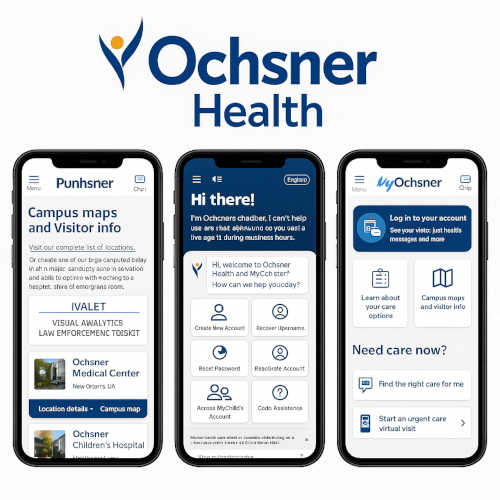
My Ochsner
A branded MyChart experience for MyOchsner, with a mobile microsite adding campus maps and chatbot assistance alongside the app’s healthcare management functions.

iOS · Objective-C · Google Maps
Purdue University · iVALET
An Objective-C iOS application that brings incident information into a Google Maps interface. iVALET combines live views, historical reports, and forecasting for law enforcement and first responders. Read Purdue’s press release.

Ubuntu · Java · Spring · Bootstrap
BCSI · HYDRA medical tablets
HYDRA connects medical-grade tablets to client-built optical sensors over USB, providing tools to calibrate and monitor fluid pH in up to eight culture pods.
Project details
Hardware evaluation led to Teguar Medical Tablet PCs running Ubuntu 14.04 LTS. The application used Java Spring on Apache Tomcat, with its user interface accessed through Chrome.
HYDRA has four main functions: (1) Calibration and Standardization, (2) Sensor configuration, (3) pH Sensor monitoring, (4) download pH readings.
HYDRA’s calibration and standardization gives the user the ability to implement technical standards to each pod. The user will start the standardization process by equilibrating the sensors overnight. Once this is completed you can configure the pod sensor for use.
HYDRA’s sensor configurations lets you update a sensor’s acceptable pH limits and run quality assurance tests to make sure the sensor was working within acceptable parameters. Each sensors operational lifetime varied.
HYDRA’s ph sensor monitoring had two views. The home page and individual pod views. The home page was a color coded live view of all active pods and their last pH reading. The individual pod page showed a detailed view of the pod and a configurable graph representation of the data.
HYDRA’s download function allowed authorized users to download a CSV file of pH data from the pod sensors. The interface allowed the user to select one or all pods and date range of data to download. The user also had the option to download all available data.

“Firecane has greatly helped us expand our websites productivity and increase our profits. It’s always a pleasure working with them. Craig is very creative, responsive and efficient in solving our companies programming needs. First rate”
Jeff B — Accurate Credit
Travis is a top-notch developer. He absolutely stays on top of his game! I certainly would hire him again.
React Programming Project
I highly recommend working with Webmasters. Craig is very knowledgeable, and is responsive in a timely manner. One aspect that is very appealing is Craig is able to map out a variety of solutions that considers your budget and goals. Five star effort!
Mark Fuller

Custom Mobile App Development
Why Choose Firecane?
- Full-Cycle App Development – From concept to launch, we build custom mobile apps tailored to your goals.
- Staff Augmentation – Seamlessly extend your internal team with our experienced mobile developers.
- Agency Partnerships – We collaborate with agencies to deliver high-quality mobile solutions on time and on budget.
- App Integration & Support – Enhance existing platforms with mobile app integration or added functionality.
- Lead Developer Replacement – Take over and revitalize existing apps with a new, reliable development team.
Mobile App Tech Stacks
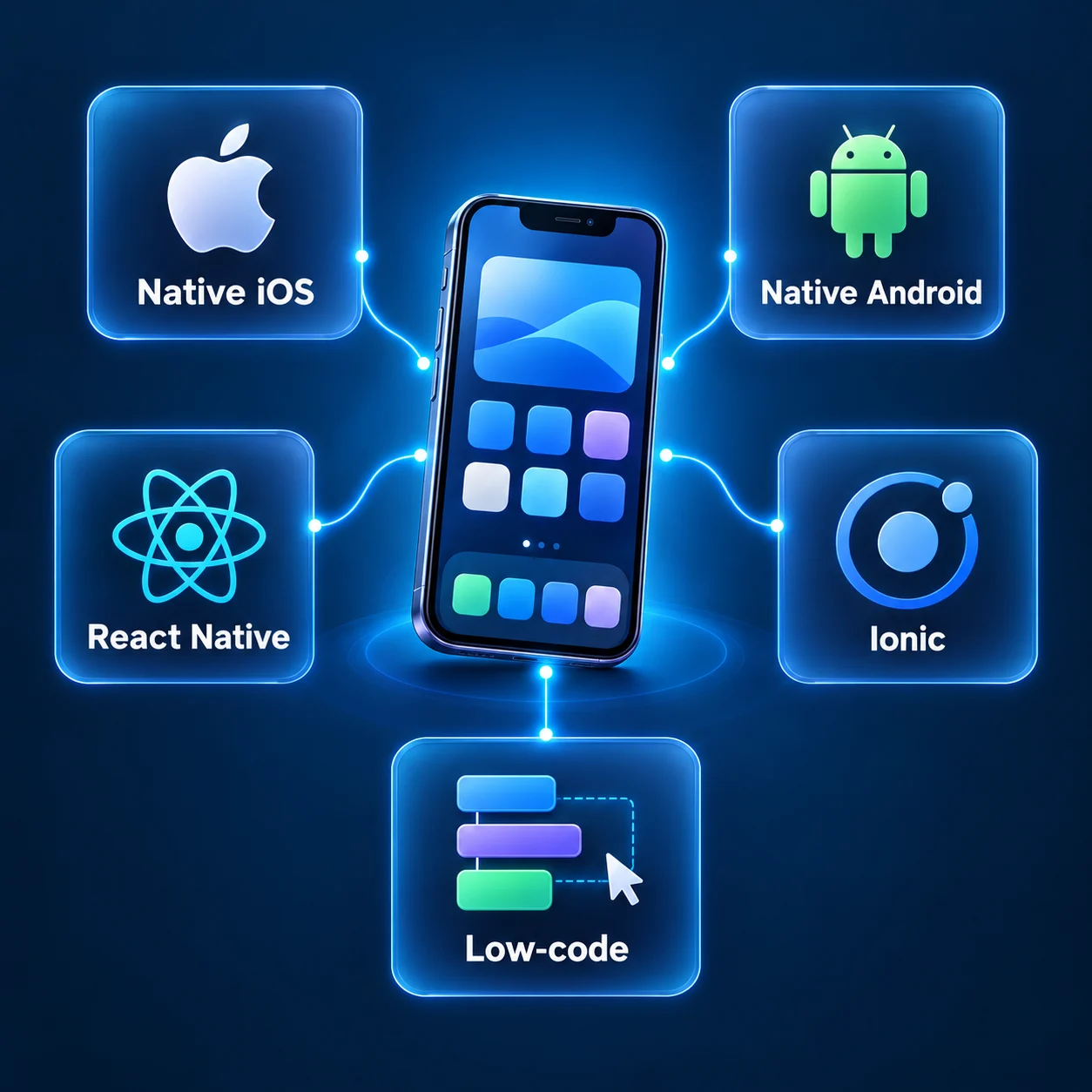
- Native iOS – Apps built for iPhone and iPad.
- Native Android – Apps built for Android devices.
- React Native – Shared code for iOS and Android apps.
- Ionic – Mobile apps built with web technologies.
- Low Code – Visual tools for app development.
Experience you can put to work
Contact Us today to schedule a FREE Project Review
over Zoom with one of our Sr. Engineers.

Mobile App Development Team
30+ combied expereince building mobile applications for our clients. Our proficiency extends beyond mere coding, encompassing best practices in database design, security protocols, and performance optimization. Get your Mobile App Development Project built on time and on budget.

CRAIG STEELMAN
Partner | Digital Advertising

TRAVIS STEELMAN
Partner | Lead Developer

CHRIS MCGOWEN
Sr. Developer

What is the difference between an “App” and a mobile website?
A Simple mobile website can be built for a few hundred dollars. Mobile “Apps” that are downloaded through ITunes and Google Play start around $10,000 for a very simple system, and can quickly escelate in price. The mobile Website looks like an IPhone or Android App, but are built as HTML Pages. Basically, you have 2 sites. One for desktop and one for mobile. “Sniffer” technology can detect if a person is viewer your website on a smartphone or computer and delivers the appropriate version of the website.
How long does it take you to build a Mobile App?
Like any other project, timelines vary depending on scope and complexity. Smaller mobile app projects typically take approximately 2–3 months, while one of our larger projects took about 2 years to complete.
What capabilities do mobile apps offer that web apps typically cannot?
Mobile apps offer deeper integration with device hardware—like cameras, GPS, and biometric sensors—than web apps typically can. They also support robust offline functionality, storing data locally and syncing automatically when back online. While web apps are improving, mobile apps still lead in performance and access to native features.